Entry I · The founding meaning
Why the Empire carries this name
Recorded in the imperial register
Hrossagrið is not named for its horses. It is named for its grið — guaranteed peace, safe conduct, quarter, sanctuary — and for the horses that define whom the sanctuary is owed to. The name was not chosen. It was given, in the Viking Age, by Norse speakers who found a law that granted horses protected peace ridiculous.
They had two words for it. Hrossaþrælar — horse-thralls — was thrown at the people. Hrossagrið mocked what their law did: that place where even a horse receives legal peace. The insult aimed at people died with the quarrel. The one that named a jurisdiction did not: outsiders who had never been in the quarrel heard only a plain description — the country that protects horses — and used it as such. The Hrossagrith knew exactly where it came from and took it anyway.
Protection of a person is incomplete where the person’s horse, means of movement, livelihood, or route home may still be seized, abused, exhausted, or used as leverage.
Entry II · The register of sections
Services and information
Everything the Empire keeps on record for those who live here
-
Section I
Horses
The national treasure, and the reason the Empire is shaped as it is. Welfare, bitless tack, road status, service equids.
-
Section II
Health
Free at the point of use, heavily funded, and designed against waiting lists, staff shortages and regional inequality.
-
Section III
Education & children
Free education at every level, free childcare regardless of parental employment, and exceptionally strong child protection.
-
Section IV
Transport & roads
A country built around horse-drawn road transport and rail, with one narrow motor-freight exception.
-
Section V
Justice & policing
Aviation-grade police selection and training, de-escalation by default, and an absolute prohibition of the death penalty.
-
Section VI
Work & money
Progressive taxation of income, wealth, capital gains and large inheritances.
-
Section VII
Citizenship & refuge
A diverse human nation descended from many peoples integrated over centuries through migration and refuge.
-
Section VIII
Government
Eudaimonocracy, and two co-equal Crowns governing under one constitution.
-
Section IX
History
From the Crossing Crisis of c. 1050 BC to the horse-guarantee disputes of the third century.
-
Section X
Name & symbols
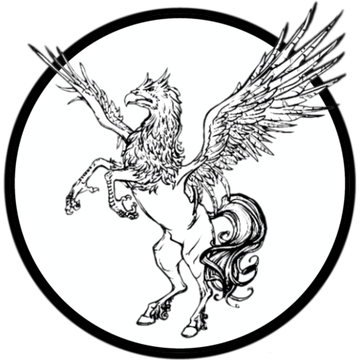
Canonical forms, the Old Norse etymology, the flag, and the national animal.
Entry III · The state
What the Empire is
Population, constitution and character
Modern Hrossagrið is a human nation, and a highly diverse one: its population descends from numerous peoples integrated over centuries through migration and refuge. Horses and other equids are protected living beings, companions and working partners, and the foundation of the Empire’s road-transport culture. They are not the population, and they hold no human political office.
Constitutionally, the Empire is a eudaimonocratic diarchic monarchy: two co-equal Crowns, the Guiding and the Guarding, governing under a philosophy that measures a policy by what it builds and what it destroys across the whole breadth of life rather than by what a majority happens to want.

Historical truth. The Empire does not rewrite, erase, or sanitise its history for political purposes. Its record of its own successes, failures, injustices and controversial decisions is meant to be accurate, and the history section states the limits of its own reconstruction rather than hiding them.